This Week (June 1, 2026) in Marketing: Email Is the Inbox Memory Layer
A few years ago, marketers talked about email like it was furniture. Necessary, old, useful, not especially exciting, and usually dragged into the conversation only when someone needed a nurture sequence, a webinar invite, a product update, or a quarterly newsletter that everyone agreed should exist and very few people wanted to write. Now, after watching every surface of the internet get lacquered in AI-generated posts, AI-generated comments, AI-generated summaries, AI-generated listicles, and AI-generated “thought leadership” that appears to have been assembled by a microwave with a LinkedIn account, email suddenly looks stranger and more valuable than people gave it credit for.
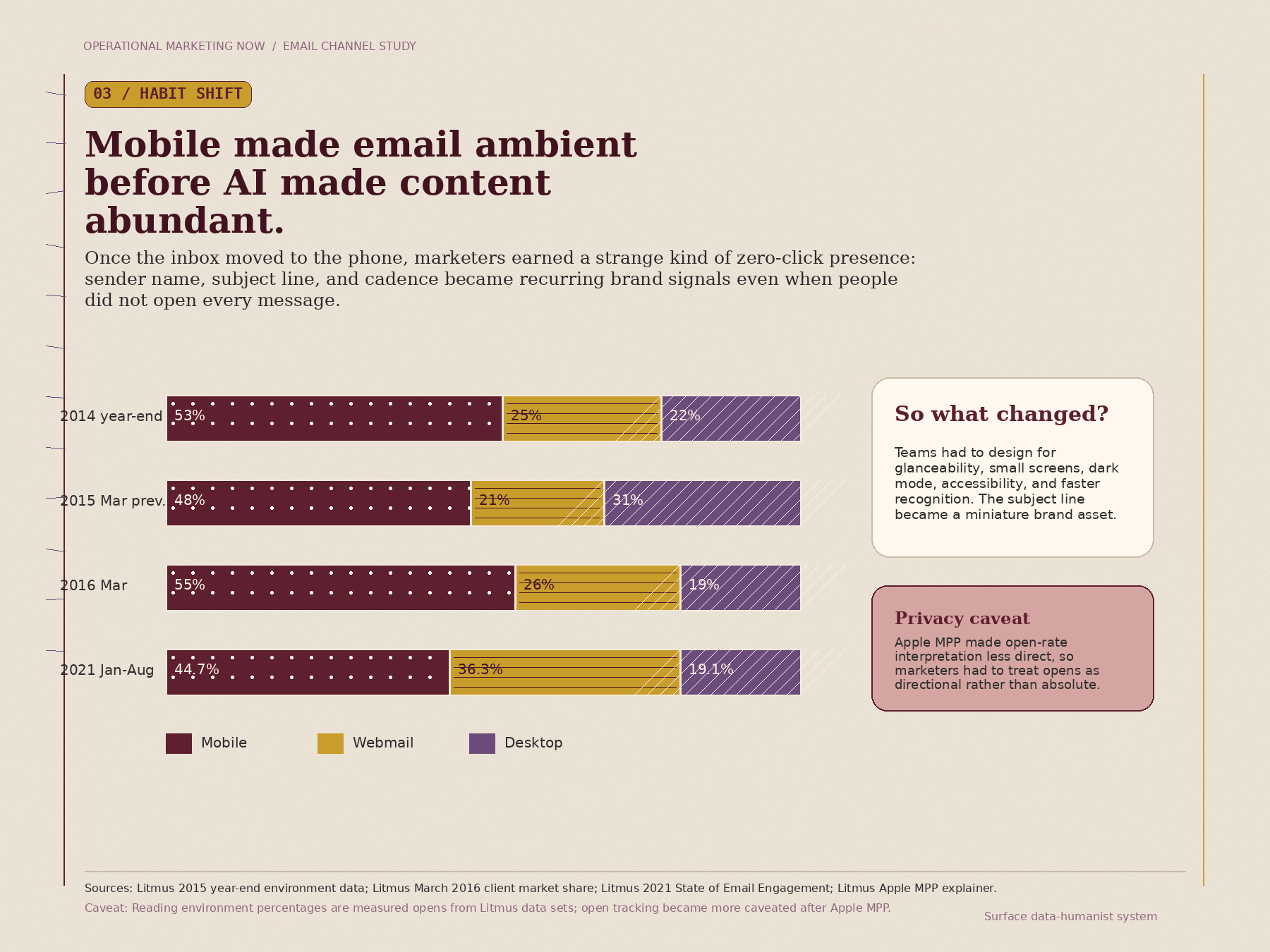
Plenty of people are starting to call email the last frontier that AI has forgotten about. I do not think that is exactly right, because AI is already inside email production, personalization, segmentation, lifecycle workflows, inbox summaries, and sales outreach. The better point is that email remains one of the few marketing channels where the brand still appears inside a personally governed space. A subject line in the inbox is not just a conversion attempt. It is a small act of repetition. The sender name, the headline, the cadence, the usefulness, the restraint, and the tone all become part of how someone remembers you.
That matters more than people want to admit. A careful email program can reinforce brand identity even when the recipient never clicks. A reader may see the notification, register the name, skim the subject line, open one out of every four sends, and still develop a durable sense of what the company notices, what it cares about, and whether it sounds like a real organization. That kind of ambient brand memory is worth a lot more than 3 million AI-generated slop posts on LinkedIn that all start with the same grievance, land on the same conclusion, and disappear into the feed like confetti in a parking lot.
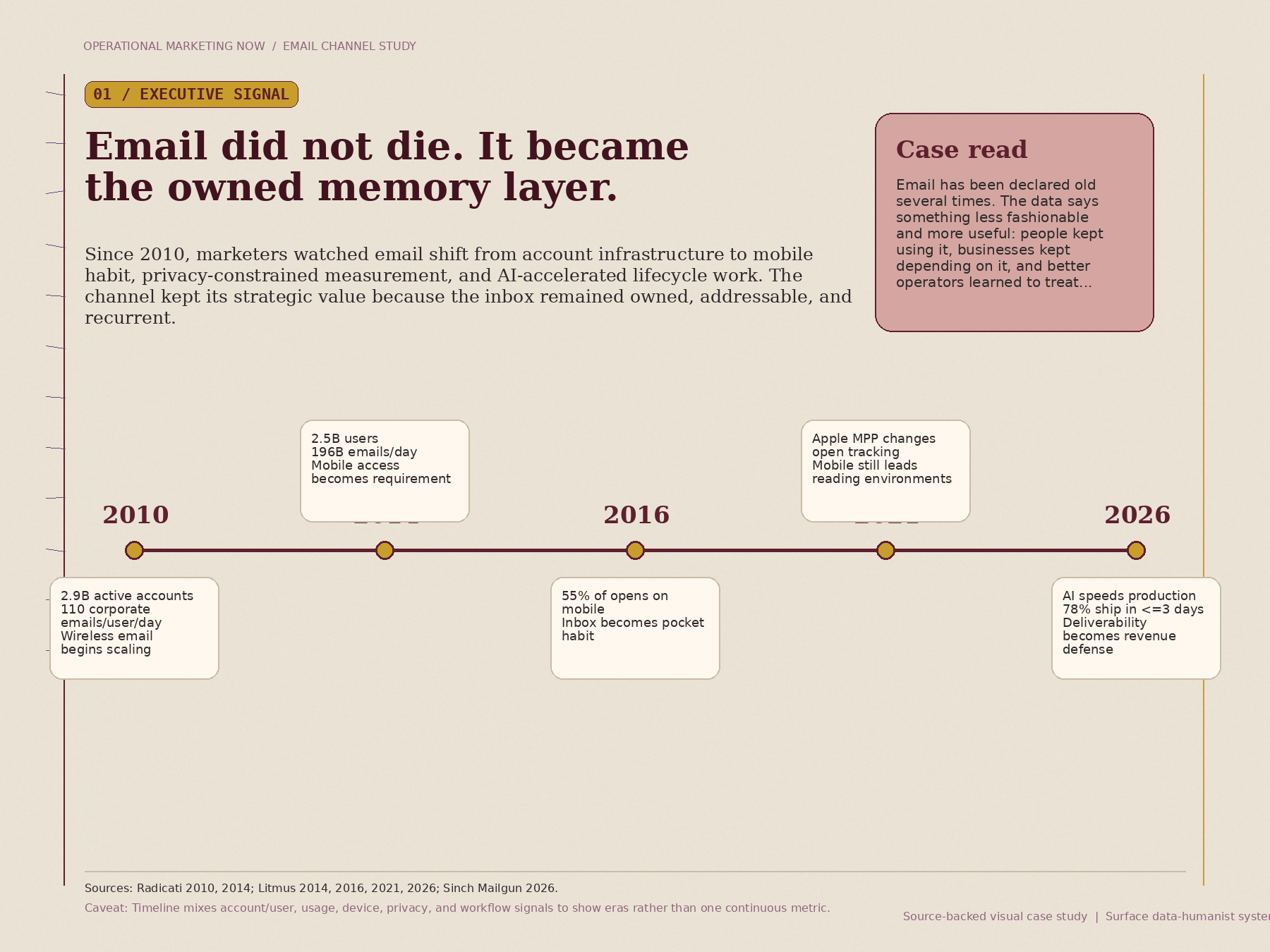
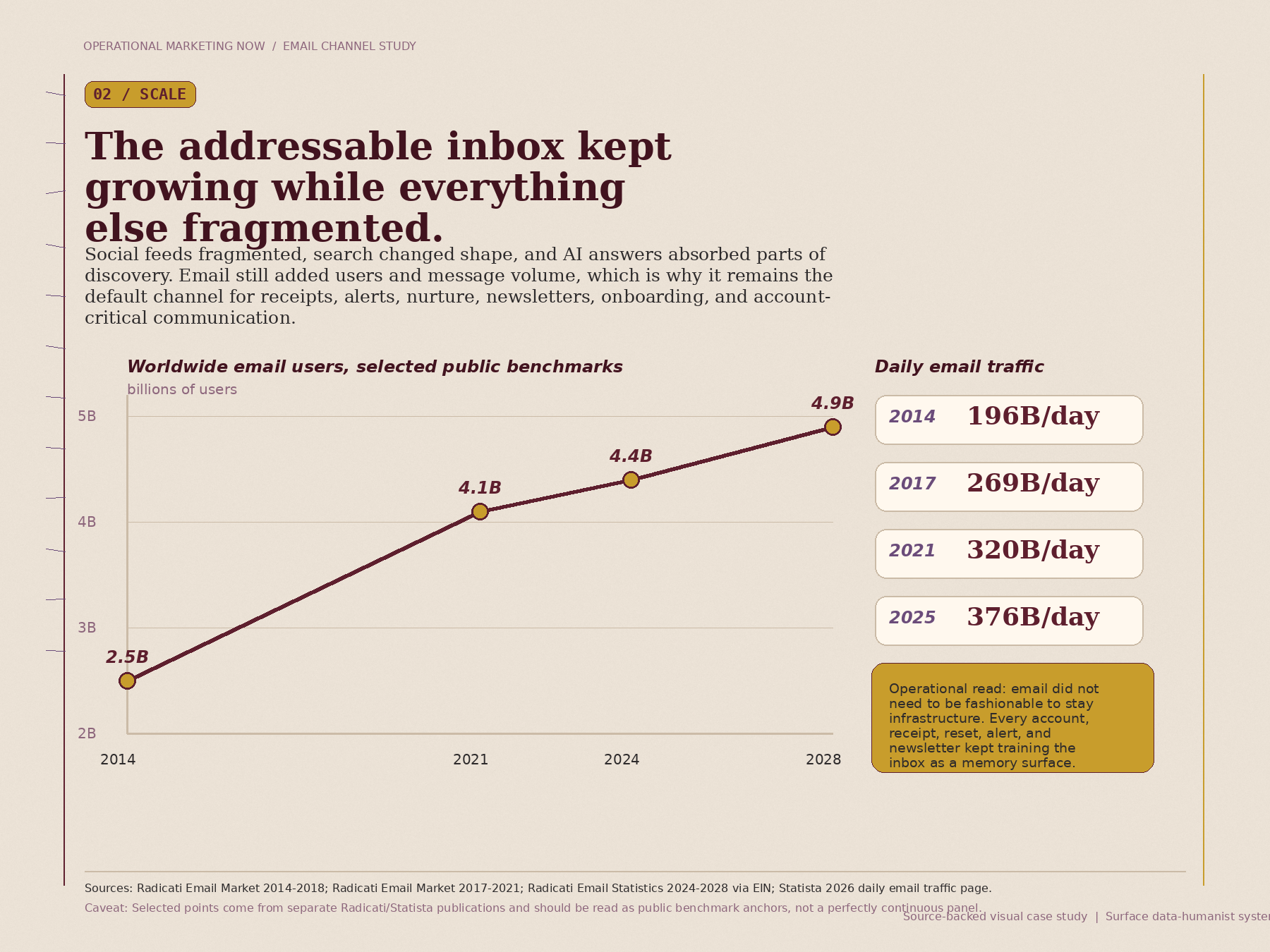
Email is perhaps the most honest zero-click marketing channel because marketers have always known the click is only part of the value. The inbox gives companies a way to show up repeatedly without renting attention from a feed every time. Strong email does not need to cosplay as an algorithmic spectacle. It needs to be useful, recognizable, paced well, written by someone with enough taste to know when to stop, and connected to a broader content system that gives people somewhere meaningful to go when they finally decide the moment is right.
The inbox is becoming part of the retrieval environment
This week’s marketing conversation should begin with email because the retrieval era is making owned relationships more important, not less. Google has talked publicly about Personal Intelligence in AI Mode, where eligible users can opt in to connect personal context from Gmail and Google Photos to receive more tailored AI Mode responses. iPullRank also published a May 2026 experiment suggesting that, inside an opted-in Personal Intelligence context, seeded brand signals in personal data sources could influence which brands appeared in recommendation-style AI Mode answers.
That finding should not send marketers sprinting toward some grim future where every lifecycle email becomes a manipulation object. Good lord, please no. What it should do is remind teams that brand memory does not live only on the public web. It lives in inboxes, receipts, onboarding messages, product updates, nurture sequences, help content, sales follow-ups, event reminders, customer newsletters, and every other owned touchpoint where a buyer has encountered the company before they ask an AI system for a recommendation.
This is where the zero-click value of email becomes operational. A buyer who has seen your company explain a category clearly for six months may not remember every email. They may not click every link. They may not convert after the third nurture send like some exhausted HubSpot diagram from 2018. But they may remember that your brand consistently explained the problem better than the alternatives, and in a world where AI systems increasingly summarize, recommend, and personalize, that repeated familiarity becomes part of the buyer’s decision environment.
Surface Labs is useful in this conversation because Surface Labs helps B2B teams capture, qualify, route, recover, and nurture inbound leads, which is exactly where the content conversation has to go after the pageview. A company can publish a brilliant article, earn AI citations, run paid campaigns, and build a beautiful content cluster, then still lose the buyer if the conversion path, lead routing, email recovery, and lifecycle follow-up feel generic or slow. Retrieval-era marketing does not end when someone finds you. It begins the moment they give you permission to keep showing up.
Google made AI search optimization official, then made it boring again
Google’s May 2026 guidance on optimizing for generative AI features in Search gave marketers something useful: permission to stop treating every AI search acronym like a new religion. Google says teams should focus on useful, unique content, crawlable pages, technical accessibility, strong media, and the same basic search foundations that help Google understand and retrieve pages. In practical terms, Google did not tell marketers to build an entirely separate swamp of machine-only content for AI Overviews and AI Mode.
That does not mean AI visibility work is fake. It means the strongest version of AI visibility is probably less glamorous than the hype cycle promised. Marketers still need to understand prompt families, source inclusion, citation behavior, entity mentions, freshness, fan-out questions, and platform-specific source mixes. Teams should still measure AI surfaces directly when buyers use those surfaces to research vendors or categories. What they should not do is take “GEO” as permission to publish thin pages that are useful to no one except a dashboard trying to justify itself.
This is the same content strategy lesson that keeps returning under new costumes. Marketers need to publish consistently, but they cannot treat volume as the whole strategy. They need templates, but they cannot confuse a template with thinking. They need SEO structure, but they cannot make the page feel like it was written by someone trapped inside a keyword tool. They need AI acceleration, but they still need human judgment, expert perspective, source discipline, and enough editorial care to make a skeptical reader keep going.
A better way to frame the work is this: every strategic page should become a citable evidence asset. That page should answer a real question, show who the answer is for, explain tradeoffs, include sources where claims need support, connect to a next step, and sit inside a clean path across the site. The page should be legible to crawlers, useful to AI systems, and worth reading by the person whose budget, reputation, or quarterly target depends on making the right decision.
AI visibility is becoming a citation market
The biggest shift in this week’s research slate is that rankings no longer explain the whole visibility field. Classic search position still matters, and anyone saying SEO is dead should probably be forced to spend one afternoon inside Google Search Console before being allowed near a microphone again. Still, AI systems often cite, summarize, and recommend from source pools that do not map neatly to the old blue-link SERP.
This changes the practical work for marketers. Teams now need to ask whether their brand appears in the answer set, whether their owned pages are cited, whether third-party sources support their claims, whether competitors dominate the comparison layer, whether video or community surfaces shape the system’s understanding, and whether cited pages are fresh enough to deserve trust. Visibility becomes less about one page winning one keyword and more about the brand earning enough reliable presence across the retrieval map.
A useful AI visibility program should therefore measure citations, mentions, source mix, prompt families, freshness lag, off-site support, and business relevance. A less useful program will produce screenshots of five prompts, call it a benchmark, and sell panic back to the client in a prettier font. The difference is method. Teams need to separate what is known from what is inferred, track uncertainty, compare platforms carefully, and connect visibility signals to qualified traffic, sales conversations, branded search, pipeline influence, and customer language.
This is also why email returns to the center. When marketers think about AI visibility only as public-page optimization, they miss the buyer’s personal context. A serious brand presence includes the owned site, the newsletter, the nurture sequence, the webinar recap, the product update, the customer story, the founder’s point of view, the support documentation, the comparison page, and the third-party conversation happening without your permission. AI search makes the whole system more visible because weak connections now have more places to break.
Ads are entering the answer layer
Google and OpenAI both moved paid media further into AI-native discovery this year. Google has been expanding ad formats around AI Mode, AI Overviews, Shopping, AI Max, and answer-style search experiences. OpenAI has also opened new ways for advertisers to buy ChatGPT ads, while publicly framing ads as separate from organic answers and governed by trust, privacy, and user-control principles.
Marketers should care about this even if they are not rushing to buy answer-layer ads tomorrow morning. The paid search unit is no longer guaranteed to live beside a query in the old familiar way. Increasingly, platforms want to answer, compare, recommend, personalize, and sometimes transact inside the same surface where the user discovers the option. That means performance marketers will need more than keyword lists and landing pages assembled under duress.
Answer-layer ads will reward clean feeds, current product data, strong claims, proof-backed landing pages, review hygiene, pricing clarity where appropriate, comparison assets, creative variations, and measurement plans that account for assisted behavior. A weak product page cannot be rescued forever by clever bidding. A thin comparison page will look especially thin when a system places it next to richer evidence. A generic nurture program will feel more generic when buyers have already been trained to expect personalized summaries everywhere else.
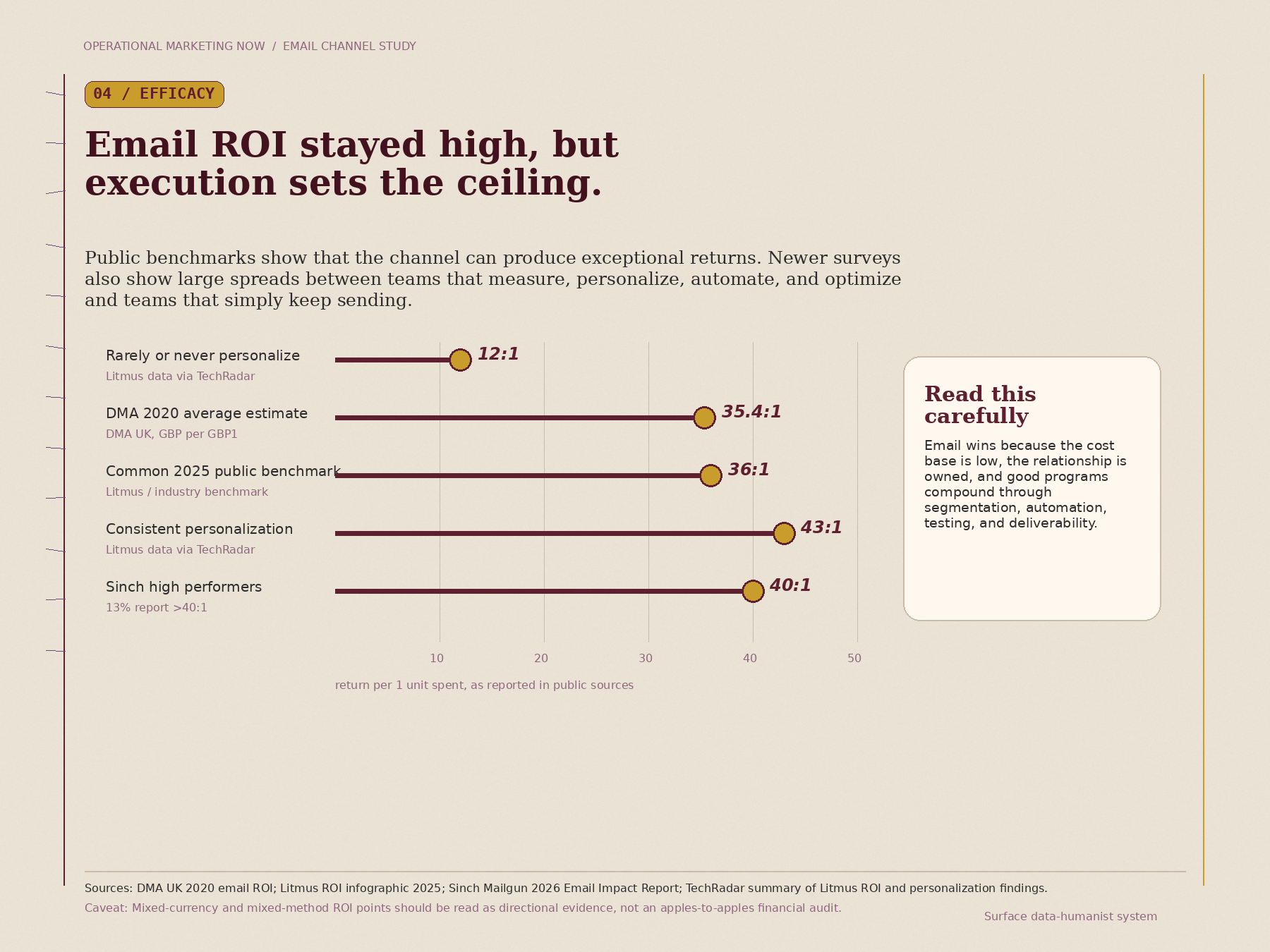
This does not mean every company needs to behave like an ecommerce marketplace. B2B teams still sell through trust, timing, committee dynamics, category education, and proof. But the operational lesson transfers cleanly: paid media, product marketing, content strategy, and lifecycle messaging need to share the same evidence base. If marketing claims one thing, the landing page says another, sales follows up with something vaguer, and email nurture drifts into soft-focus brand poetry with no operational value, the buyer will feel the seams.
The new dashboard needs citations and caveats
Bing’s AI Performance reporting in Webmaster Tools is one of the more useful signals in this broader shift because it gives site owners a direct way to see AI citations across supported Microsoft AI experiences. Marketers should not treat that as a complete view of AI visibility, but it does mark a meaningful change in what search platforms may be willing to report. Total citations, average cited pages, grounding queries, page-level citation activity, and trends over time give teams another layer beyond rankings and clicks.
The danger is obvious. Marketing teams can turn any metric into a vanity metric if they stare at it long enough and detach it from business context. Citation counts do not automatically prove revenue impact. Mentions do not automatically prove trust. AI visibility does not automatically prove demand. A page can be cited for the wrong reason, surfaced to the wrong audience, or included in an answer that produces no meaningful business action.
A better dashboard would combine classic search performance, AI citation activity, source mix, branded demand, email engagement, lifecycle movement, assisted conversion, sales feedback, and qualitative buyer language. It would also include caveats. Which platform produced the signal? Which prompt family? Which date range? Which geography? Which account context? Which source types? How stable was the result across repeated tests? Which findings are strong enough to act on, and which are directional enough to watch?
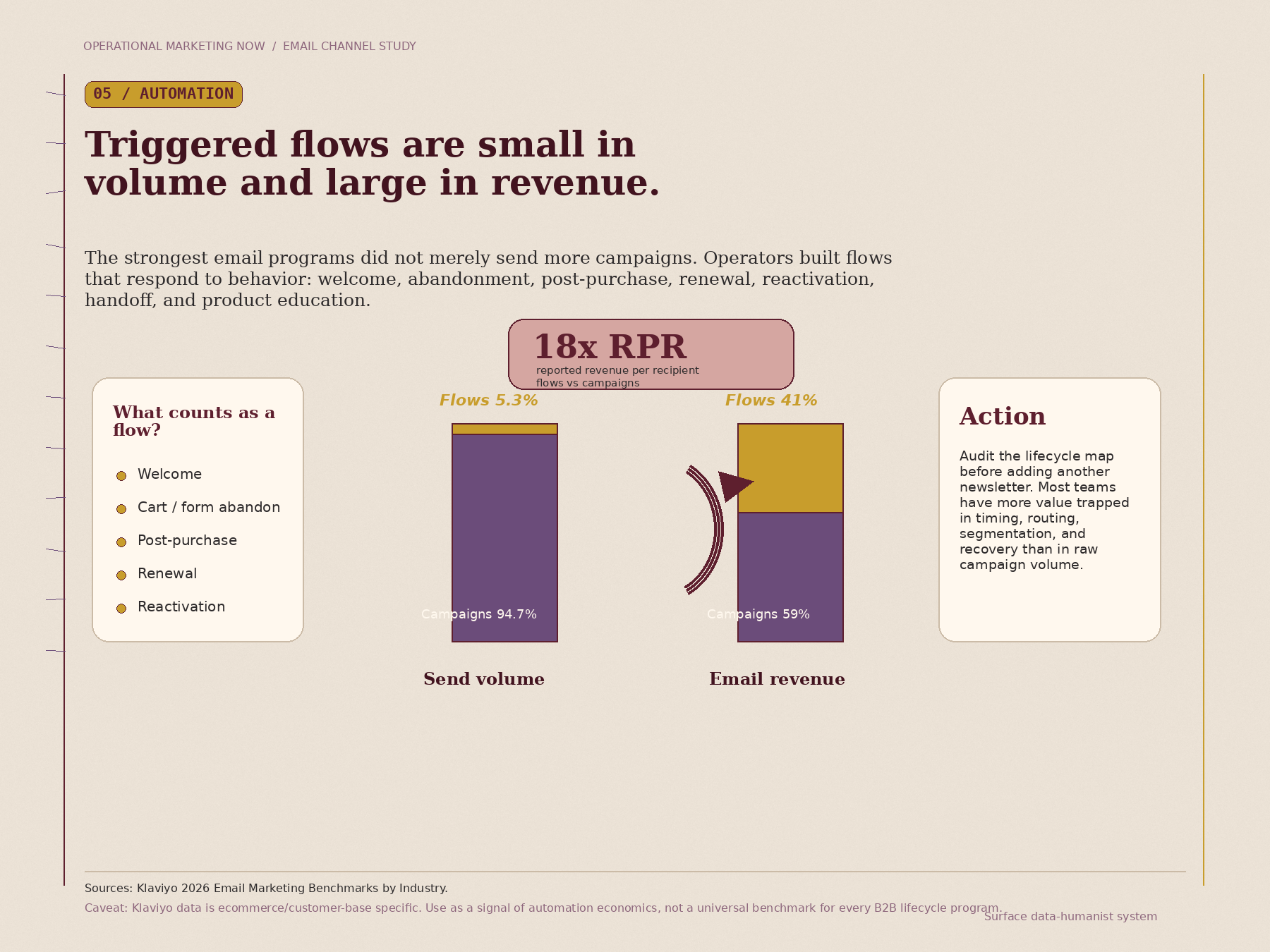
This is where Surface’s broader marketing operations frame fits the moment. Teams do not need more charts for the dashboard museum. They need a system that shows which forms, pages, sources, campaigns, follow-ups, and lead paths actually move buyers toward a qualified conversation. The retrieval era adds new visibility surfaces, but the old business question remains wonderfully stubborn: did the work help the right person take the right next step?
What marketers should do this week
Start with email because email is where owned attention becomes memory. Review your sender names, subject lines, newsletter cadence, lifecycle sequences, onboarding emails, event follow-ups, and re-engagement campaigns. Ask whether a recipient who never clicks would still understand what your company believes, what problem you solve, and why you are worth remembering. If the answer is no, your email program is probably functioning as a delivery mechanism rather than a brand system.
Next, audit five strategic pages for citable usefulness. Pick a core landing page, a comparison page, a product or service page, a high-intent blog, and a customer proof page. Ask whether each page gives a human reader and a retrieval system enough context to trust the answer. Look for stale claims, missing sources, vague differentiators, weak internal links, unsupported superlatives, buried CTAs, and places where a buyer would need a salesperson to explain what the page should have explained.
Then connect the content path to the lead path. A blog should know which page it supports. A landing page should know which proof it depends on. A conversion form should know what kind of buyer it is capturing. A routing system should know which team should follow up. A nurture sequence should know what the buyer has already seen and what they need next. Surface’s product system matters here because inbound conversion has become a continuation of content strategy, not a separate operational chore.
Finally, build your retrieval-era scorecard with humility. Track organic rankings, AI citations, brand mentions, source diversity, email engagement, lead quality, assisted pipeline, and sales feedback, but resist the urge to turn early AI visibility data into fake precision. The marketers who win this phase will be the ones who can measure more without pretending every new number deserves executive certainty.
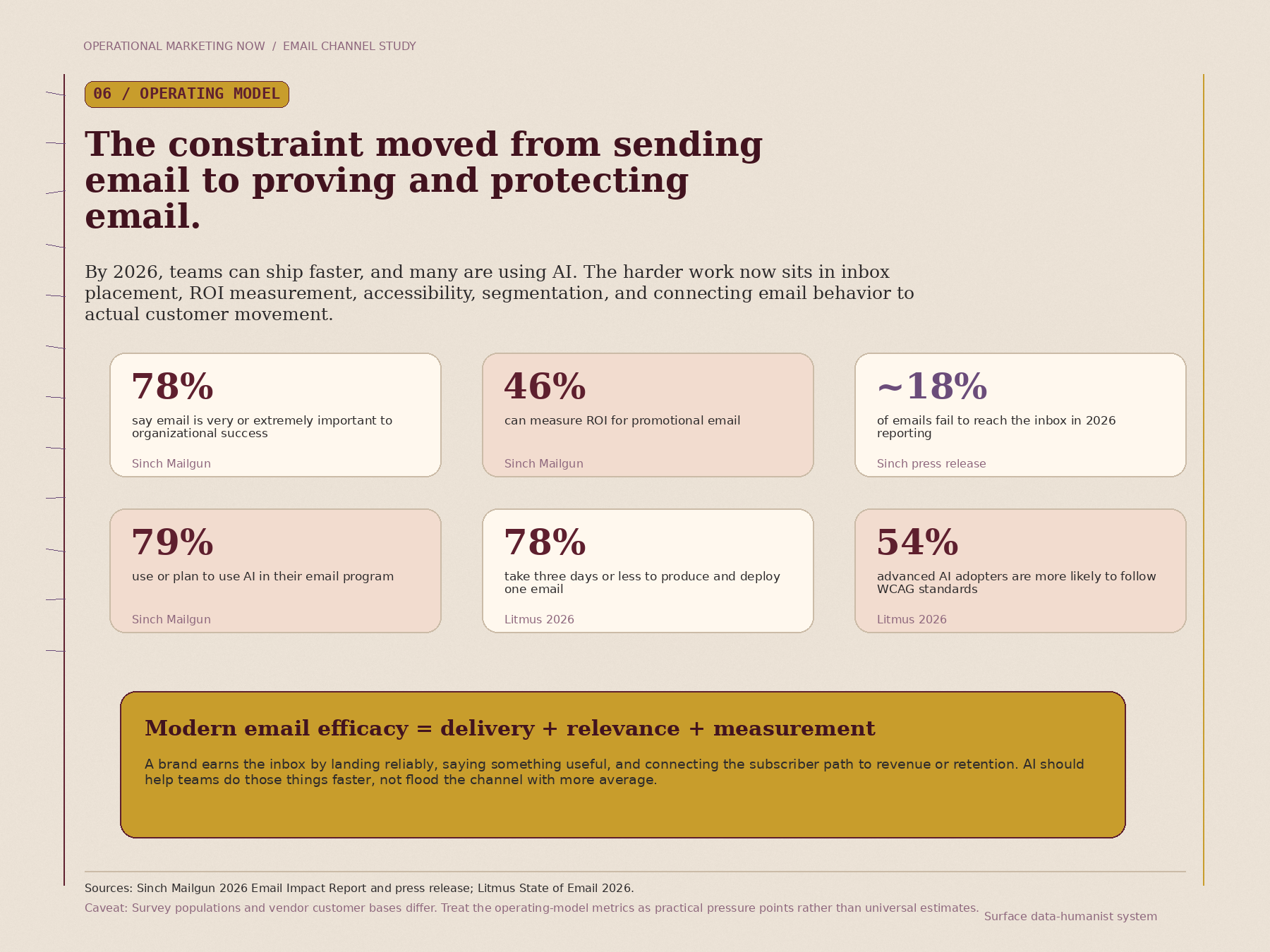
The practical takeaway
Email is not the forgotten channel. It is the channel many teams forgot how to respect.
A good email program gives buyers a repeated, owned, low-friction encounter with the brand. A good content program gives those buyers a path from question to confidence. A good AI visibility program makes the company easier for retrieval systems to find, cite, and understand. A good paid media program makes sure product evidence can survive inside answer-layer environments. A good measurement program tells the truth about what is known, what is inferred, and what still needs to be tested.
The boring version of the future is probably the correct one. Marketers need cleaner systems, better pages, stronger sources, more useful emails, clearer paths, and more honest measurement. AI can help with all of that, but only if people use the tools to increase judgment rather than avoid it.
A slew of personally crafted emails and email nurture campaigns will do more for brand memory than a landfill of AI-generated posts because memory requires recurrence, specificity, and trust. People remember brands that keep showing up with something useful to say. They forget brands that sound like everyone else at impossible scale.
This week in marketing, the inbox looks less like a relic and more like an operating system for attention. Treat it accordingly.