Marketing Trends in the week of June 22nd, 2026
A CMO opens the Monday dashboard and asks a question that sounds simple enough: “Are we showing up in AI search?”
The SEO lead has one answer. Some pages are being cited. Some prompts mention the brand. Some competitors appear more often. The analytics lead has another answer. GA4 now shows an AI Assistant channel for traffic from tools like ChatGPT, Gemini, and Claude. The paid media lead has a third answer. Google is moving ads into AI Mode and AI Overviews, but the reporting will not give a clean AI-only placement breakdown in the way everyone wants. RevOps has the least romantic answer: “A few of these leads look good, but we do not know whether AI exposure helped create them.”
That is the week in one room.
Marketers are not waiting for AI search to become real anymore. They are waiting for it to become accountable. Over the last month, Google introduced dedicated Search Generative AI performance reports in Search Console, GA4 added a native AI Assistant traffic channel, Google announced new AI Search controls and insights for website owners, and paid media teams got another round of AI-era Search ad updates from Google Marketing Live.
The practical conclusion is uncomfortable but useful: brand visibility is becoming measurable before it becomes cleanly measurable.
The old dashboard cannot carry the new behavior
For years, marketers could survive with a familiar stack of questions. Did the page rank? Did the ad click? Did the lead convert? Did the sales team accept the opportunity? Plenty of arguments happened inside that model, but the basic chain was legible. Discovery created traffic. Traffic created leads. Leads created pipeline. Pipeline created revenue.
AI search interrupts that story because it adds invisible and semi-visible events before the click. A buyer may ask an assistant for a shortlist. The assistant may retrieve a page but not cite it. It may cite a page but summarize the answer so completely that no click happens. It may mention a brand because that brand appears across third-party sources. It may recommend a vendor, after which the buyer searches the brand name on Google, visits the site directly, asks a colleague, or shows up later through paid search.
None of that fits neatly into last-click attribution.
Google’s GA4 update helps because it gives teams a default AI Assistant channel for traffic from tools like ChatGPT, Gemini, Claude, and similar assistants. That does not solve upstream exposure, but it does stop one common failure: treating AI assistant visits as miscellaneous referral noise. Search Console’s generative AI reports help from the other side by exposing impressions, pages, countries, devices, and dates for generative AI features in Search. That still does not tell you everything a buyer saw, believed, or acted on, but it creates a platform-native visibility signal.
Teams building lead journey tracking now need to add a layer before the visible visit. The question is no longer only “which channel drove this session?” It is also “which AI-mediated exposures may have shaped the buyer’s shortlist before the session existed?”
AI visibility is not one metric
The mistake will be naming one new number “AI visibility” and treating it like truth. AI visibility is not a single thing. It is a chain of states.
A page can rank without being cited. A page can be retrieved without being cited. A brand can be mentioned without a source link. A source can be cited without the brand being recommended. A brand can be recommended without a click. A recommendation can create later branded search. A branded search can convert through paid, direct, organic, or sales-assisted paths.
That chain is the reason AI visibility reporting without fake precision needs to separate rankings, retrieval, citations, mentions, recommendations, referrals, and business response. A screenshot can show presence. It cannot prove incrementality. A citation count can show that a source is being used. It cannot automatically tell you whether that source changed a buyer’s mind.
The measurement work becomes more useful when teams stop asking one broad question and start asking better smaller ones:
-
Which prompts mention us?
-
Which prompts recommend us?
-
Which pages are cited?
-
Which third-party sources reinforce our claims?
-
Which AI-referred sessions show meaningful engagement?
-
Which AI-influenced journeys become qualified pipeline?
-
Which competitors appear because their source ecosystem is stronger than ours?
Thinking about query fan-out in Google AI search gives marketers a useful operating frame. AI systems may break one buyer prompt into several related searches before composing an answer. That means one page rarely carries the whole job. Category pages, comparison pages, proof assets, implementation guides, product pages, third-party references, and conversion paths all start working as one source system.
Product marketing just entered the measurement room
Product marketers should pay attention because AI recommendations behave more like product positioning than like old search snippets. An assistant does not merely rank pages. It compresses the category, compares options, decides which attributes matter, and returns a recommendation in language the buyer may treat as neutral.
That makes product architecture, proof, positioning, comparison language, use cases, objections, and source quality part of the retrieval system.
A recent academic study, From Prompt to Purchase, found that conversational assistant recommendations increased same-name Google searches, own-site visits, and brand-specific retailer-page visits among users with no recent observed engagement with the recommended brand. The study did not observe transactions, and that caveat matters. Still, it gives marketers a stronger way to talk about upstream influence: AI recommendations can create brand-seeking behavior that referrer logs and last-click reports may miss.
Reuters also reported Adobe Analytics data showing that AI-referred U.S. retail shoppers in May generated 53% more revenue per visit than non-AI visitors and showed stronger engagement. B2B marketers should not copy retail conclusions blindly. A shopper buying apparel and a buying committee evaluating a technical product are not the same situation. The directional lesson still matters: AI-referred traffic may be low-volume but unusually informed, problem-aware, or close to action.
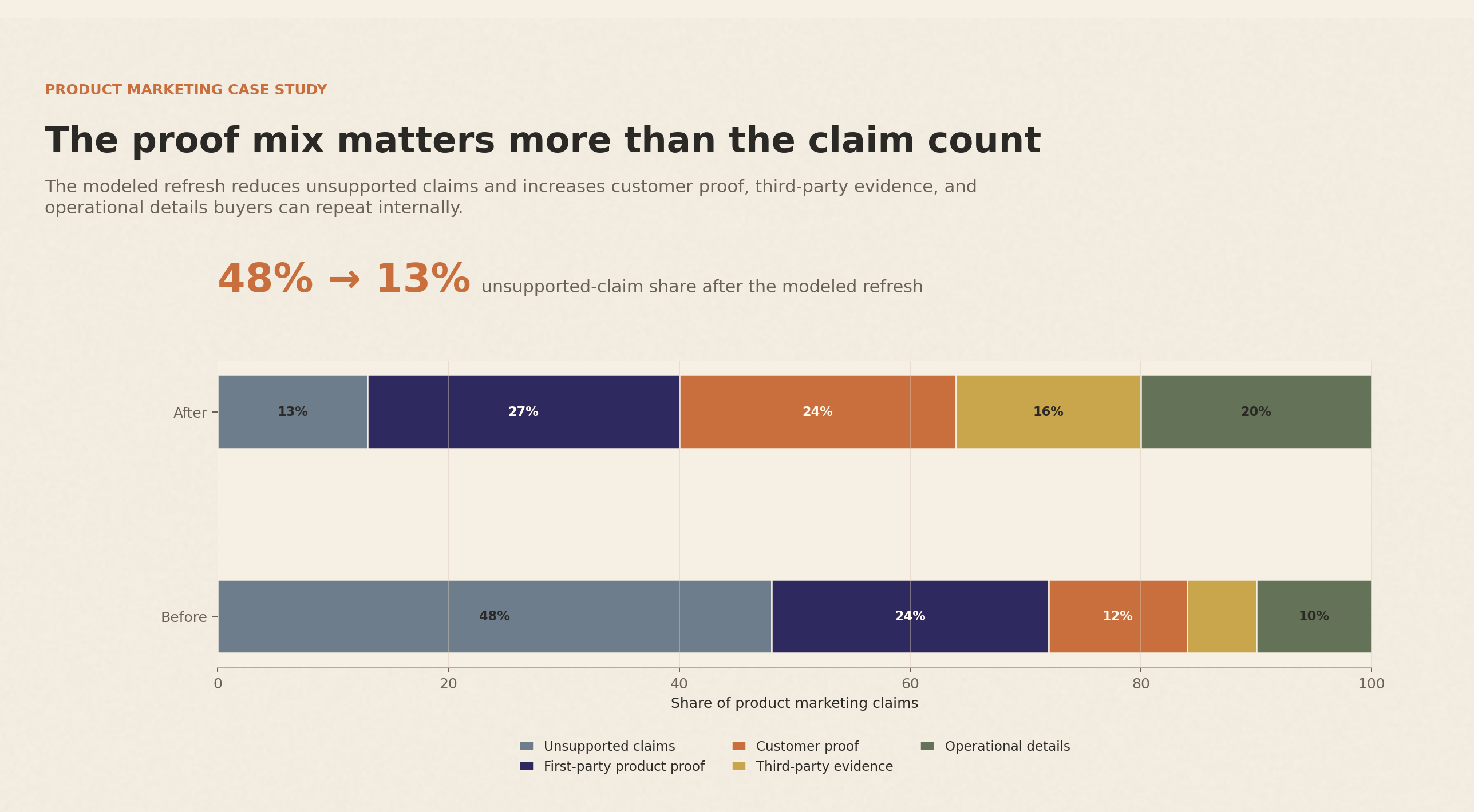
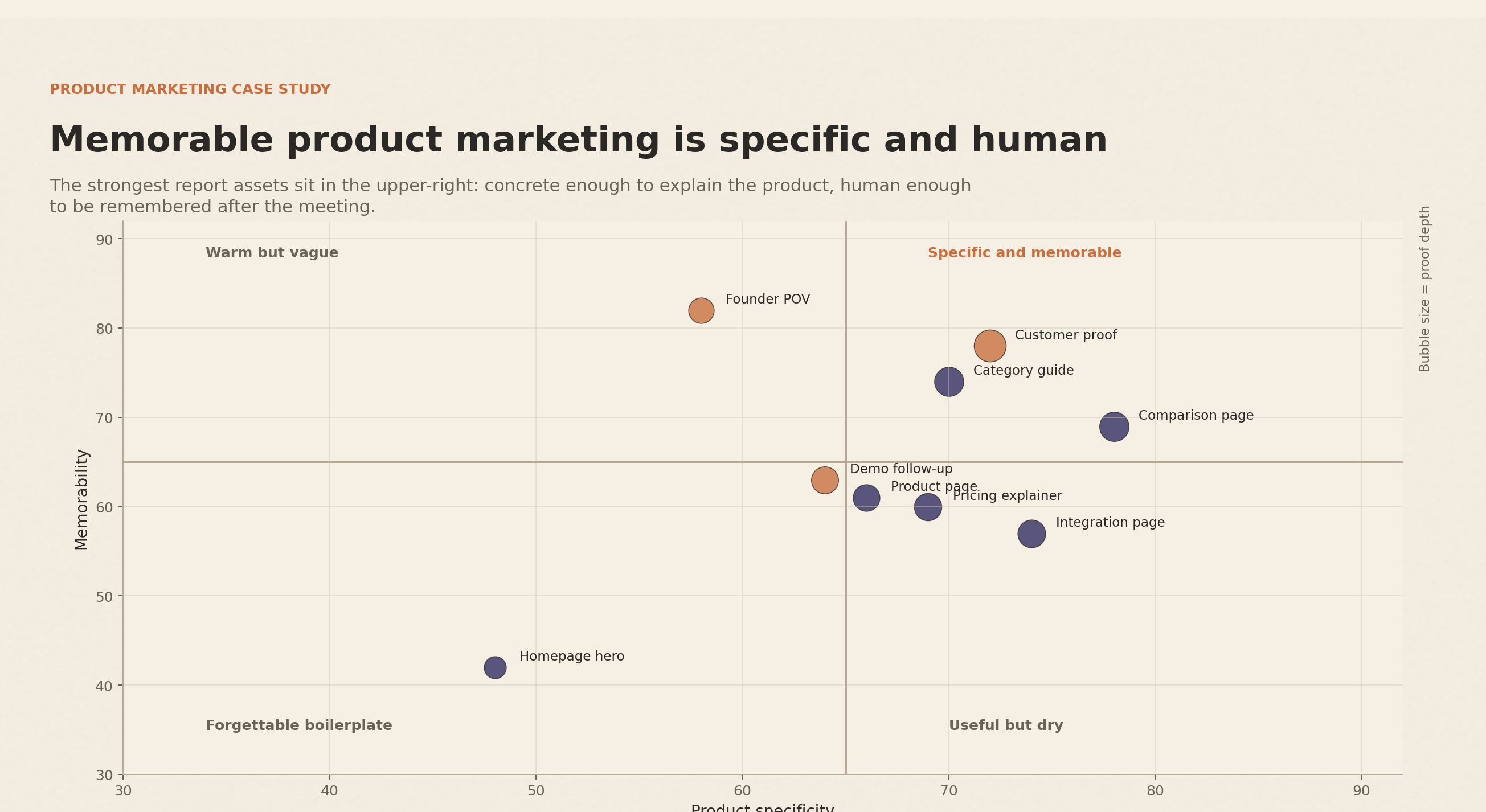
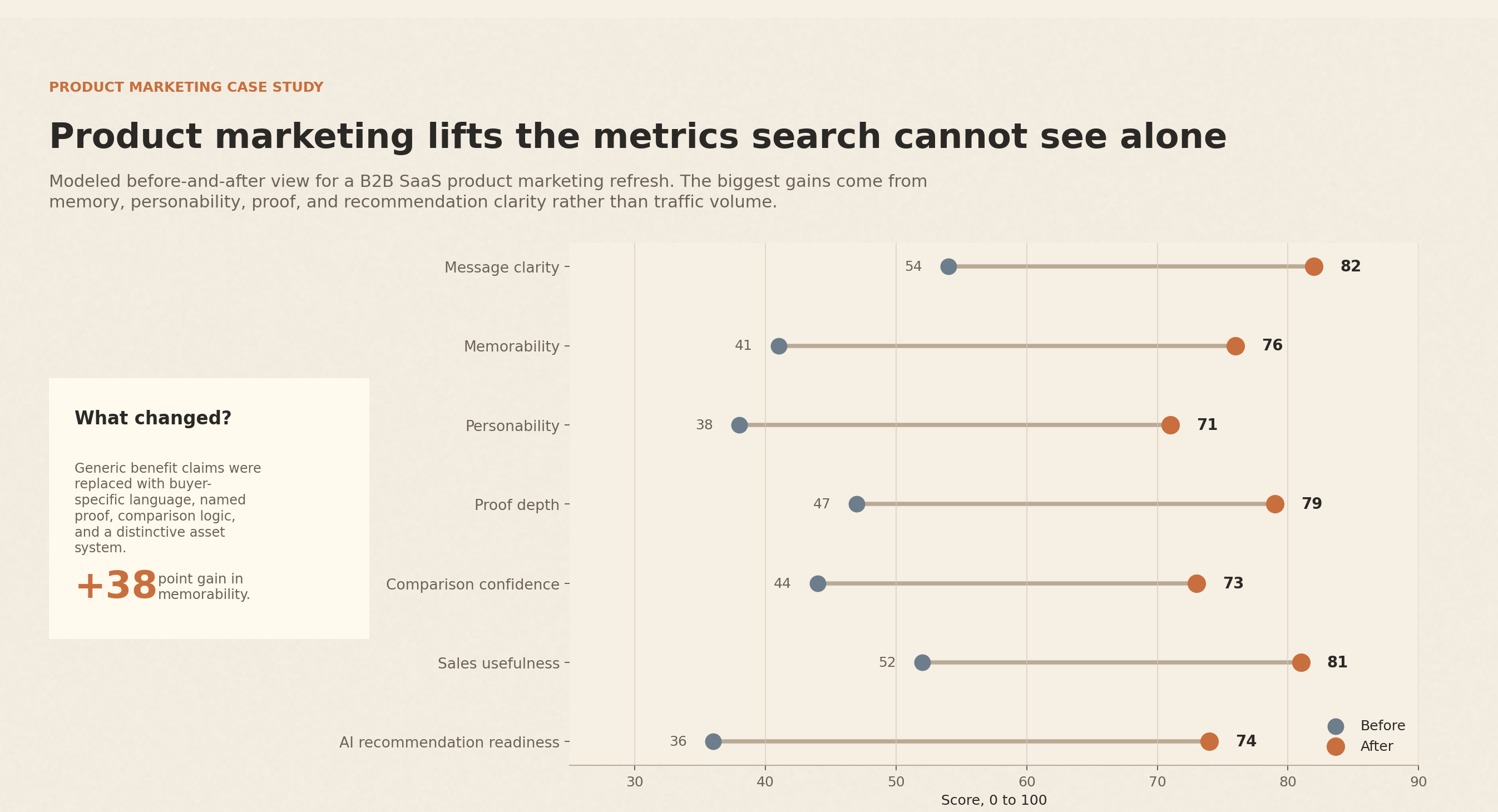
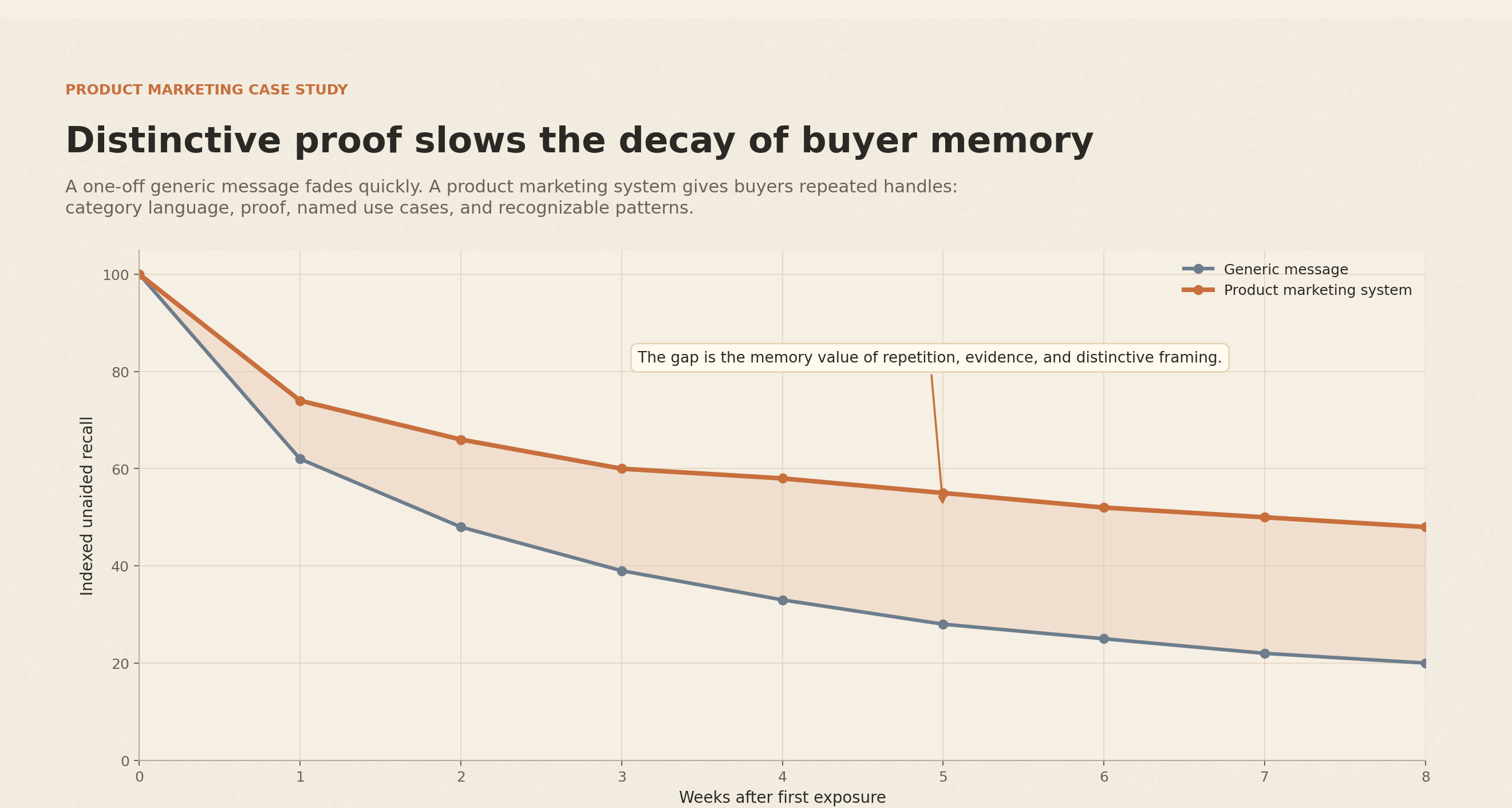
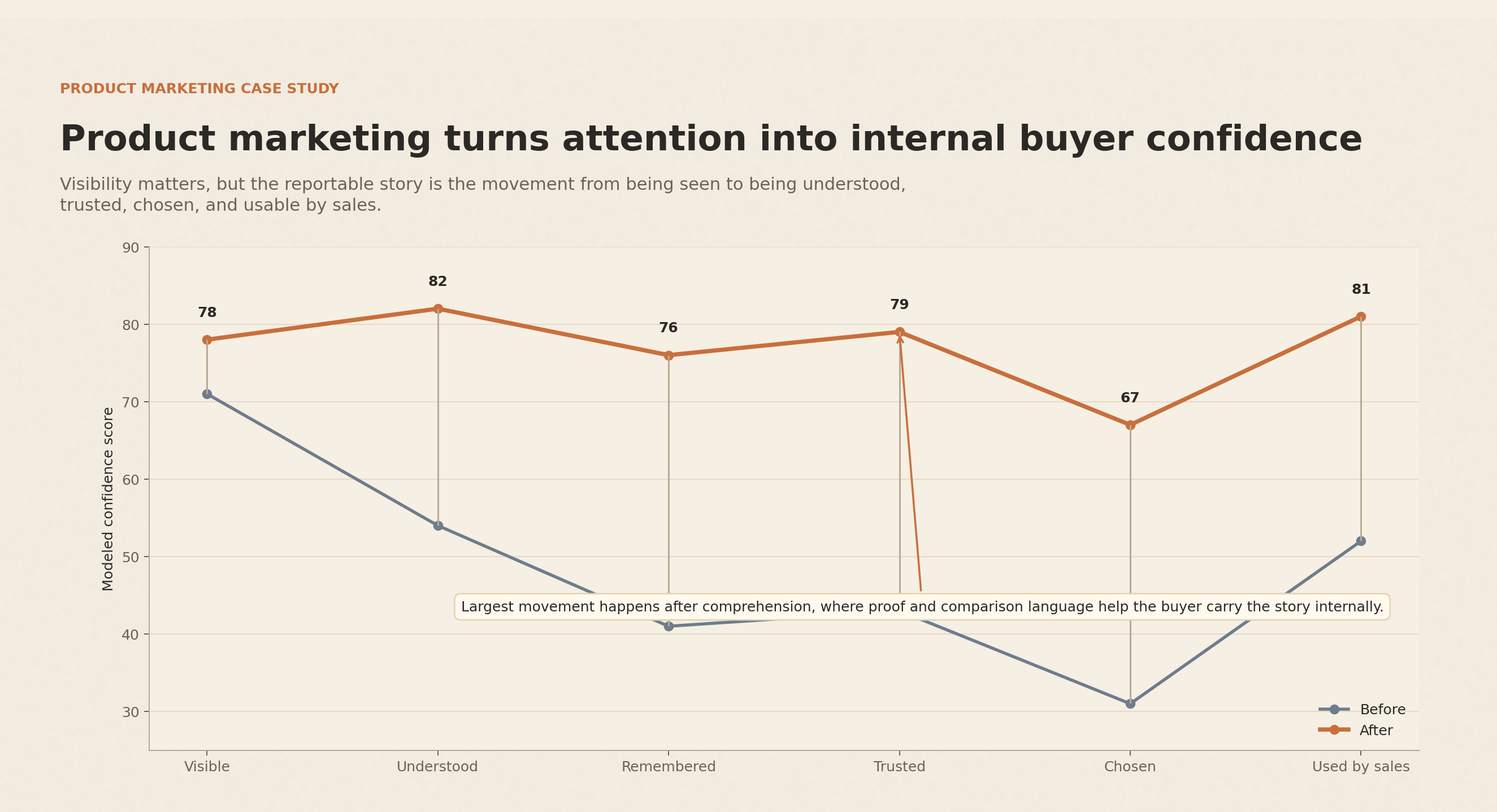
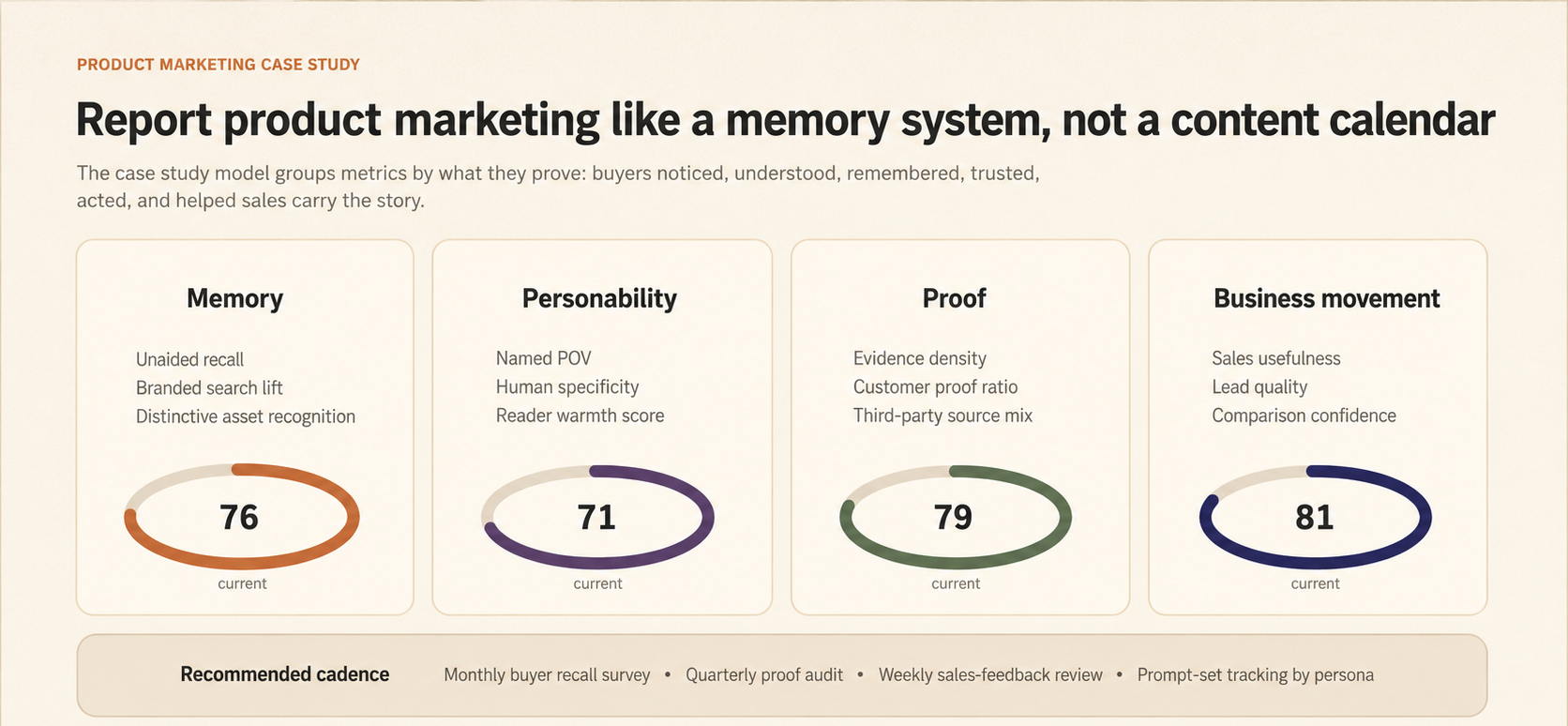
That is why product marketing needs to be measured as a memory and buyer-confidence system, not only a content output function. The product marketing expansion on product marketing for AI recommendations should sit beside the measurement work, because brands become easier to recommend when their proof is easier to find, their claims are easier to cite, and their category position is easier to understand.
We believe content marketing strategy now has to defend both reach and trust. More pages do not automatically create more authority. A smaller system of current, specific, evidence-backed pages can often do more work than a bloated archive full of thin explanations.
Paid search is moving faster than paid search reporting
Paid media teams are facing the sharpest version of this problem. Google is moving ad experiences into AI Mode and AI Search, including new ad formats built with Gemini and expanded commerce-oriented ad experiences. Search Engine Land’s coverage of Google Ads clarifications after Google Marketing Live noted that AI Max is not required for AI Search ads, and that advertisers should not expect a clean separate performance breakout for AI Overviews or AI Mode ads.
That does not mean paid media teams should ignore the channel. It means the test design matters more than the product label. AI media formats need stronger conversion data, cleaner first-party signals, better exclusions, clearer landing pages, and sales feedback loops. Google’s enhanced conversion and Data Manager updates point in the same direction: AI-powered media systems need better event quality if marketers expect them to optimize toward useful outcomes.
The paid media expansion on testing AI Max without losing the plot should be read as a measurement readiness guide, not a platform reaction. The question is not “should we turn on AI Max?” The better question is “do we have clean enough conversion data, campaign structure, landing page intent, and CRM feedback to learn anything useful from the test?”
Teams using inbound marketing automation should make sure conversion events, lead scoring, routing, CRM enrichment, and sales acceptance are strong enough to keep paid AI experiments honest. If a campaign optimizes toward low-quality form fills, the problem is not only the campaign. It is the measurement system feeding the campaign.
AI search control is becoming part of brand strategy
The regulatory and publisher-control story matters because marketers are used to thinking about AI visibility as exposure. Publishers are forcing the second question: exposure on whose terms?
Google announced new tools for website owners navigating AI in Search, including Search Console controls and performance insights. Google also expanded Preferred Sources into AI Overviews and AI Mode, making source preference more visible inside AI-assisted search experiences. The UK Competition and Markets Authority has also pushed Google toward stronger publisher controls, attribution, links, and opt-out options around AI features.
For most B2B marketers, the immediate action is not to opt out of everything. The immediate action is to know what would happen if you did. Which pages are traffic acquisition pages? Which pages are citation and authority pages? Which pages contain sensitive claims? Which pages are customer proof assets? Which pages would you want summarized accurately, and which would you rather keep closer to the site experience?
The governance expansion on AI search controls, opt-outs, and Preferred Sources treats this as a page-role problem. Some pages should act as open citation assets. Some pages should be controlled conversion assets. Some pages contain sensitive claims and need tighter sourcing. Some old pages are outdated risk assets. Some pages should exist primarily as authority reinforcement.
That classification matters because a page is no longer merely a page. It is a potential answer source, ad landing page, citation object, sales enablement asset, and machine-readable fragment of the company’s public memory.
 ## What marketers should build next
The right response is a measurement layer with humility built in.
Start with a visibility taxonomy. Separate classic rankings, AI citations, brand mentions, assistant recommendations, AI Assistant referrals, paid AI exposures, branded search lift, qualified lead behavior, sales acceptance, and revenue influence. Do not collapse them into one score unless the score is clearly labeled as an index.
Then create a prompt and query set that reflects how buyers actually ask questions. Include broad category prompts, comparison prompts, implementation prompts, problem prompts, alternative prompts, and competitor prompts. Repeat them over time. Single-prompt screenshots can be useful as examples, but they are weak evidence by themselves.
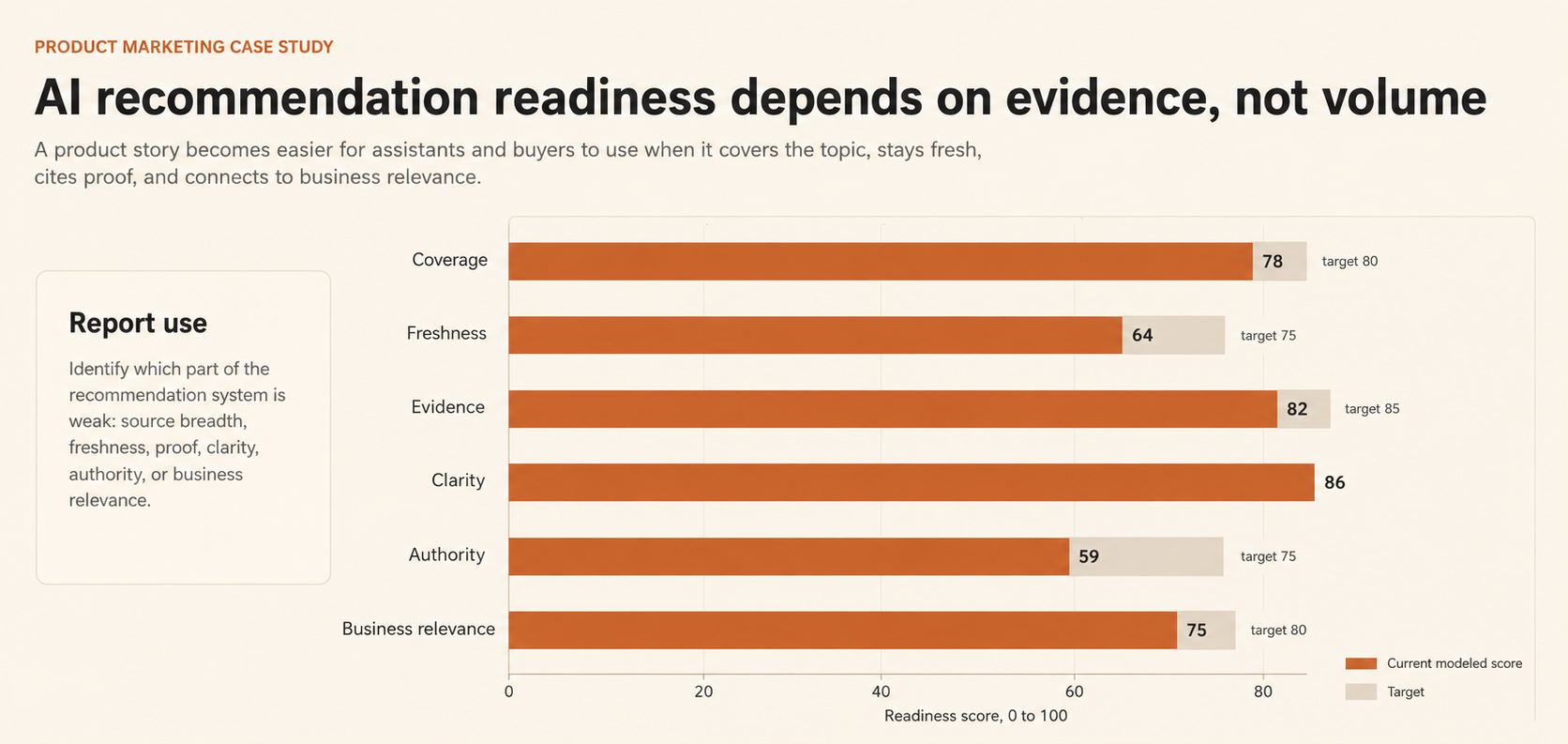
Next, refresh the source ecosystem. Owned pages should be current, specific, evidence-backed, and clear. Third-party proof should not be treated as PR decoration. Reviews, customer quotes, analyst mentions, partner pages, video, community answers, and credible comparison content all influence whether a brand feels safe to recommend.
Then tie the dashboard to revenue reality. AI visibility reporting should sit next to CRM and sales data, not in a novelty tab. If a cited page generates no qualified behavior, ask whether the page answers the wrong question, attracts the wrong buyer, or lacks a conversion path. If AI Assistant referrals convert unusually well, inspect what those sessions saw before the form fill. If branded search rises after AI recommendation exposure, call it suggestive until incrementality testing makes the case stronger.
Finally, use how to actually measure lead quality as the guardrail. AI visibility is only useful if it helps the company attract better-fit buyers, create clearer sales conversations, and move real opportunities forward.
What is known, what is inferred, and what is still unsettled
What is known: AI-mediated discovery is now visible enough to measure in pieces. Search Console can show generative AI impressions for participating site owners. GA4 can classify traffic from AI assistants. Google is expanding AI Search ad formats. Regulators are forcing more publisher-control questions. Research is beginning to show that assistant recommendations can affect downstream brand-seeking behavior.
What is inferred: brand, product marketing, analytics, SEO, paid media, and RevOps are converging because AI search compresses what used to be separate steps: category education, vendor discovery, comparison, recommendation, and conversion. The teams that manage those steps separately will have a harder time understanding what changed.
What is still unsettled: AI search behavior is variable. Reporting is partial. AI Overview and AI Mode surfaces will continue changing. Paid placement transparency remains limited. Regulatory requirements differ by market. Academic studies are improving the evidence base, but they do not remove the need for cautious interpretation. Research on Google AI Overviews has already shown that AI-generated search results can activate differently by query type and use sources differently from traditional ranking systems.
Marketers do not need perfect certainty to act. They need enough structure to avoid mistaking visibility for revenue, volume for authority, or platform adoption for strategy.
The Surface view: measure the brand before the click
The old dashboard was built for clicks. The new one has to account for what happened before the click existed.
That does not mean abandoning SEO, paid media, content strategy, or product marketing fundamentals. It means connecting them with more honesty. A buyer’s path may now move from an AI answer to a branded search, from a recommendation to a sales conversation, from a cited blog to a pricing-page visit, from a paid AI surface to a CRM record that only becomes meaningful after sales reviews fit.
The teams that win will not be the ones that declare SEO dead or AI search solved. They will be the ones that can say, with some precision and some restraint, where the brand appears, why it appears there, what evidence supports it, which buyers respond, and what the business should do next.
Brand measurement is becoming a source ecosystem, not a channel report. The sooner marketers build that layer, the less likely they are to confuse a new dashboard tile for a new strategy.