This Week’s Marketing: The Reader Still Matters
There is a very specific kind of content advice that has started to drive me insane. It usually comes from someone who has not read a book in years, has no serious relationship to longform attention, has very little curiosity about how people actually understand complicated ideas, and yet feels perfectly comfortable advising professionals on how to write content intended to be read.
They will tell you no one reads anymore. They will tell you every paragraph needs to be one sentence. They will tell you every idea needs to be flattened, simplified, repackaged, reprompted, and reassembled until it looks like a LinkedIn thread that got trapped inside a SaaS landing page.
And sure, fine, people scan. People skim. People bounce. People open seventeen tabs and forget why they opened twelve of them. I am not arguing that every B2B buyer is sitting by candlelight with a cup of tea, murmuring lovingly over your comparison page about enterprise workflow orchestration.
But the fact that people are busy does not mean they cannot read. It means they are selective about what deserves attention.
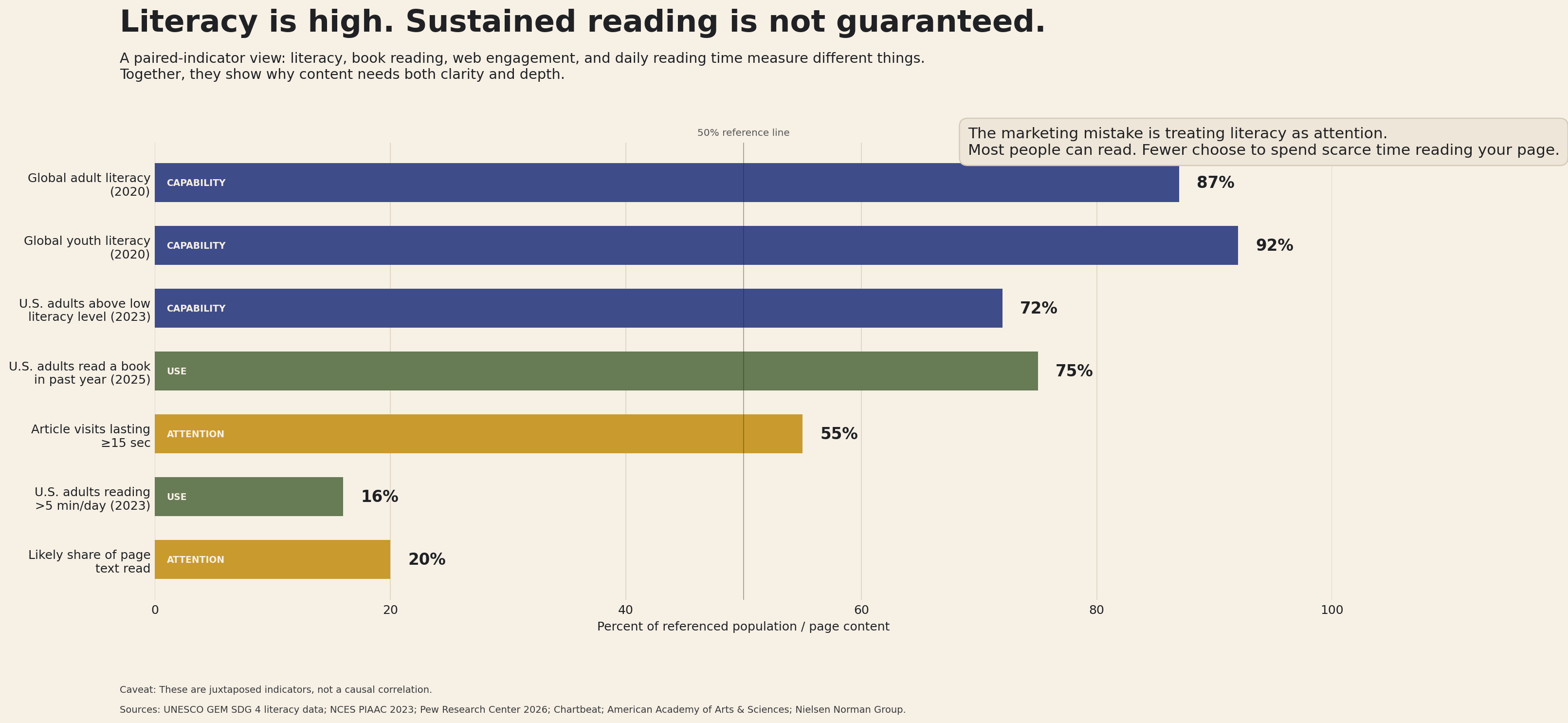
If you do not read, I am not sure why you should be treated as an authority on how people read. If you do not spend time inside books, essays, transcripts, product documentation, research papers, technical pages, or even genuinely useful blog posts, then your advice about “readability” is probably just advice about formatting. Formatting matters, but comprehension is not the same thing as whitespace.
This week’s marketing theme is reading comprehension.
Not in the elementary-school sense. In the operational sense.
Can a buyer understand what you mean? Can a founder verify your claim? Can a sales team point to the page without apologizing for it? Can an AI system retrieve your content, summarize it, cite it, and still preserve the argument? Can a skeptical reader move from question to comparison to decision without feeling like they walked into a room full of inflatable furniture?
That is the work.
The first reader is now an interface
The weirdest shift in marketing right now is that the first reader of your content may no longer be a person.
A search interface may read it first. An answer engine may read it first. A retrieval system may read it first. A browser agent, chatbot, AI Overview, product-discovery layer, or citation system may read it first, compress it, classify it, and hand a version of it to a buyer before that buyer ever reaches your site.
This does not make writing for humans less important. It makes the human part more exposed.
If an AI system summarizes your page badly, some of that may be the system’s fault. If your page gives it a vague claim, no source trail, weak structure, no dated evidence, no product specificity, and six paragraphs of “in today’s fast-paced digital landscape,” some of that is on you.
Google’s own guidance on creating helpful, reliable, people-first content is still a useful corrective here because it asks creators to evaluate whether their work benefits people first. The retrieval-era version of that question is slightly sharper: did your team create something a human can understand and a machine can cite without mangling the idea?
The page has to be legible to machines and useful to people. That sounds obvious until you read most B2B content.
A lot of teams still treat content as if the job is to publish enough pages to create the ambient smell of expertise. The older content-farm version of this was thousands of thin pages targeting every keyword variant. The newer AI version is prettier, faster, and somehow even more depressing. Teams generate posts, briefs, comparison pages, newsletters, infographics, and “thought leadership” assets in bulk, then act surprised when none of it feels like it came from a living company with a real point of view.
The retrieval era punishes that more quietly. Sometimes your traffic drops. Sometimes your traffic stays fine, but buyers stop trusting the page. Sometimes an AI answer cites your competitor because they gave the system a cleaner, fresher, more complete source trail. Sometimes the page technically ranks, but the reader gets there and feels the unmistakable sensation of having arrived at a professionally decorated empty room.
Visibility is easier. Comprehension is harder.
Visibility is no longer the hard part in quite the same way.
A team with decent tools, decent keyword data, a competent CMS, and a steady publishing process can generate impressions. They can create topical coverage. They can enter the conversation. They can even earn some citations if they cover the right fan-out queries and keep pages fresh.
The harder question is whether any of that visibility helps a buyer understand what the company does, why it matters, how it compares, and when it should be trusted.
Surface Labs has written elsewhere about how B2B marketing has changed in the last few years, and that shift matters here because the old operating model was more comfortable than the current one. Teams could generate leads with content, score behavior, nurture through email, and pass MQLs to sales. Today, buyers move through messier paths, AI systems touch more of the journey, and marketers have to care about what happens after a pageview.
This is where a lot of marketing teams confuse activity for strategy.
A content strategy is not just a calendar. It is the thought that goes into what should exist, why it should exist, who it helps, what question it answers, what decision it supports, and how it connects to the rest of the site. If you sell more than one thing, which most companies do, you need to show how those domains stand alone and how they connect. SEO, paid media, product marketing, technical architecture, conversion, and sales enablement may all belong to the same business goal, but they do not all speak with the same voice or serve the same reader moment.
That is why intent still matters.
Someone asking “what is SEO?” is not asking the same question as someone asking “best SEO agency for B2B SaaS migration support.” Someone asking “what is AI visibility?” is not asking the same question as someone asking “how do I measure AI citations against named competitors?” The first person may need orientation. The second person may need comparison. The third person may need proof, pricing context, implementation risk, and a reason to trust you.
Different questions warrant different responses.
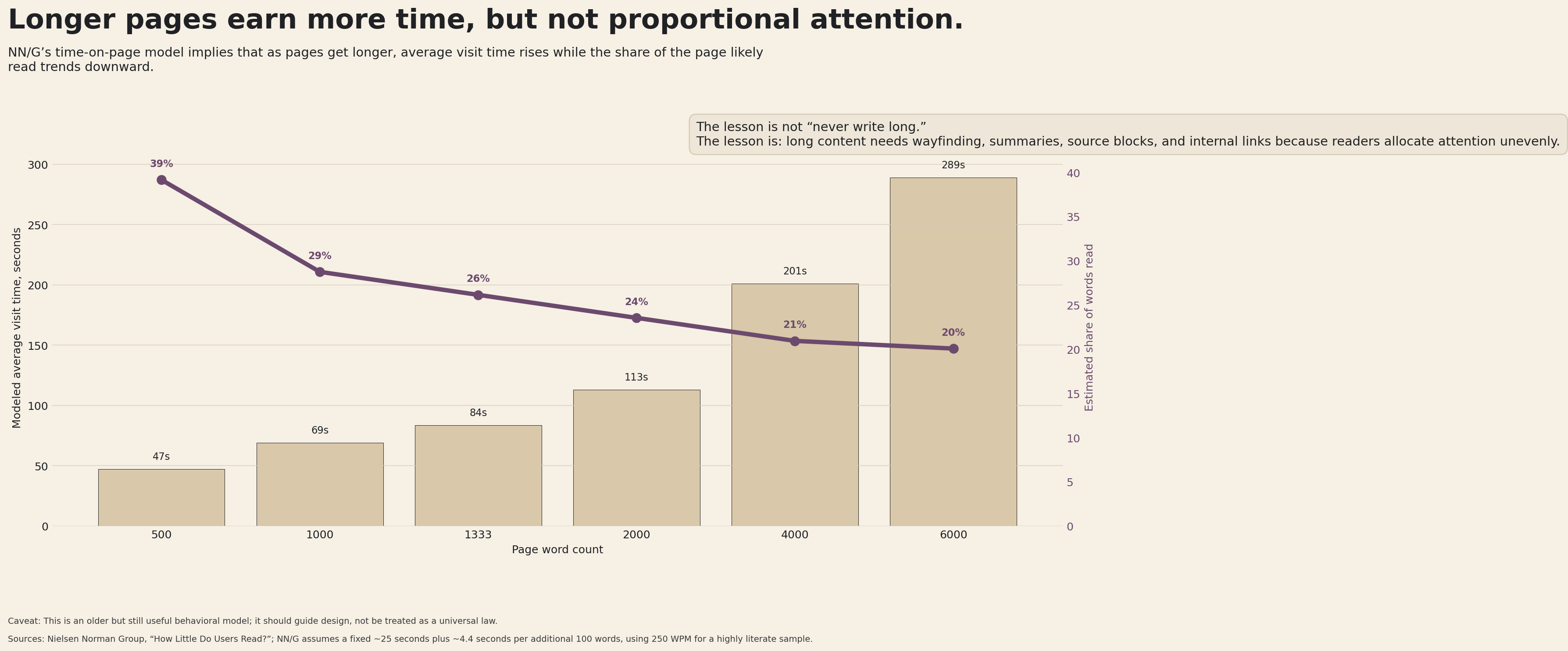
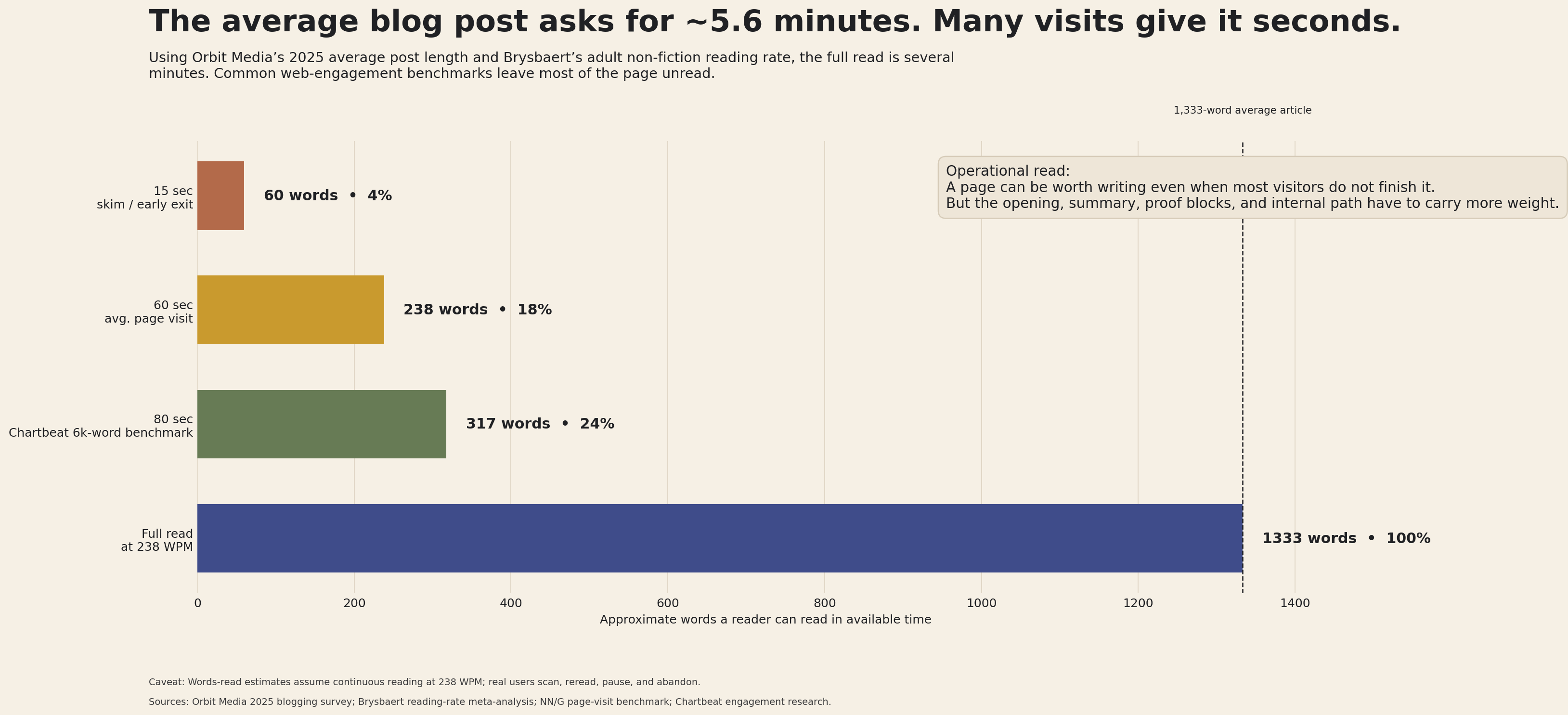
This is also why the “make it shorter” advice gets so lazy. Some questions deserve a glossary entry. Some deserve a 1,500-word explainer. Some deserve a decision page with tables, examples, schema, FAQs, sources, screenshots, caveats, and a clean conversion path. Length is not the strategy. Matching the answer to the intent is the strategy.
AI visibility is becoming a citation market
Volume alone is weak.
The measurable levers are coverage, freshness, evidence, clarity, and source mix. In other words, teams should stop asking only, “How many pages did we publish?” and start asking, “How well did we cover the retrieval map?”
That map has a few layers. You need a strong owned page that clearly explains the topic. You need supporting pages that cover fan-out questions, comparisons, use cases, objections, integrations, and alternatives. You need fresh claims, dated evidence, and visible sources. You need off-site mentions, reviews, community references, video, press, and expert conversations that make your brand easier to verify outside of your own domain.
This is why AI visibility behaves less like a traffic game and more like a citation ecosystem.
A classic SEO program could often survive by getting the right page to rank for the right keyword. That still matters, but AI surfaces now pull from a more varied source set. Some cited pages rank well in traditional search. Some do not. Some brands show up because they own the site architecture. Some show up because other people talk about them in places the model or system trusts.
Surface’s piece on every AI tool that touches your leads right now is a useful reminder that AI is no longer one discrete layer of the marketing stack. AI systems now evaluate, enrich, route, summarize, score, and respond across the lead journey. If those systems touch the buyer before your team does, your content has to carry more explanatory weight than it used to.
The uncomfortable part for marketers is that this rewards actual presence.
You cannot fake your way into every source layer forever. You can create first-party pages. You can build comparison content. You can update documentation. You can publish research. You can earn mentions. You can encourage reviews. You can show up in community conversations. You can help executives say something useful in public. But at some point, the brand has to become part of the conversation it wants to be cited inside.
This is where the cheap version of AI content starts to break. It can create words. It struggles to create legitimate participation.
The best content gives people a path to walk
One of the simplest tests for a content program is whether a reader can walk through it.
Can someone move from a basic question to a more specific question to a comparison to a proof point to a conversion page without the site making them work like an unpaid research assistant?
A lot of teams publish blogs as if every post lives alone in a field somewhere. Good luck, little blog. Hope someone finds you. Hope they understand what to do next. Hope they can figure out that the product page in the footer is related to the thing they just read.
That is not strategy. That is littering with analytics attached. A better system builds paths.
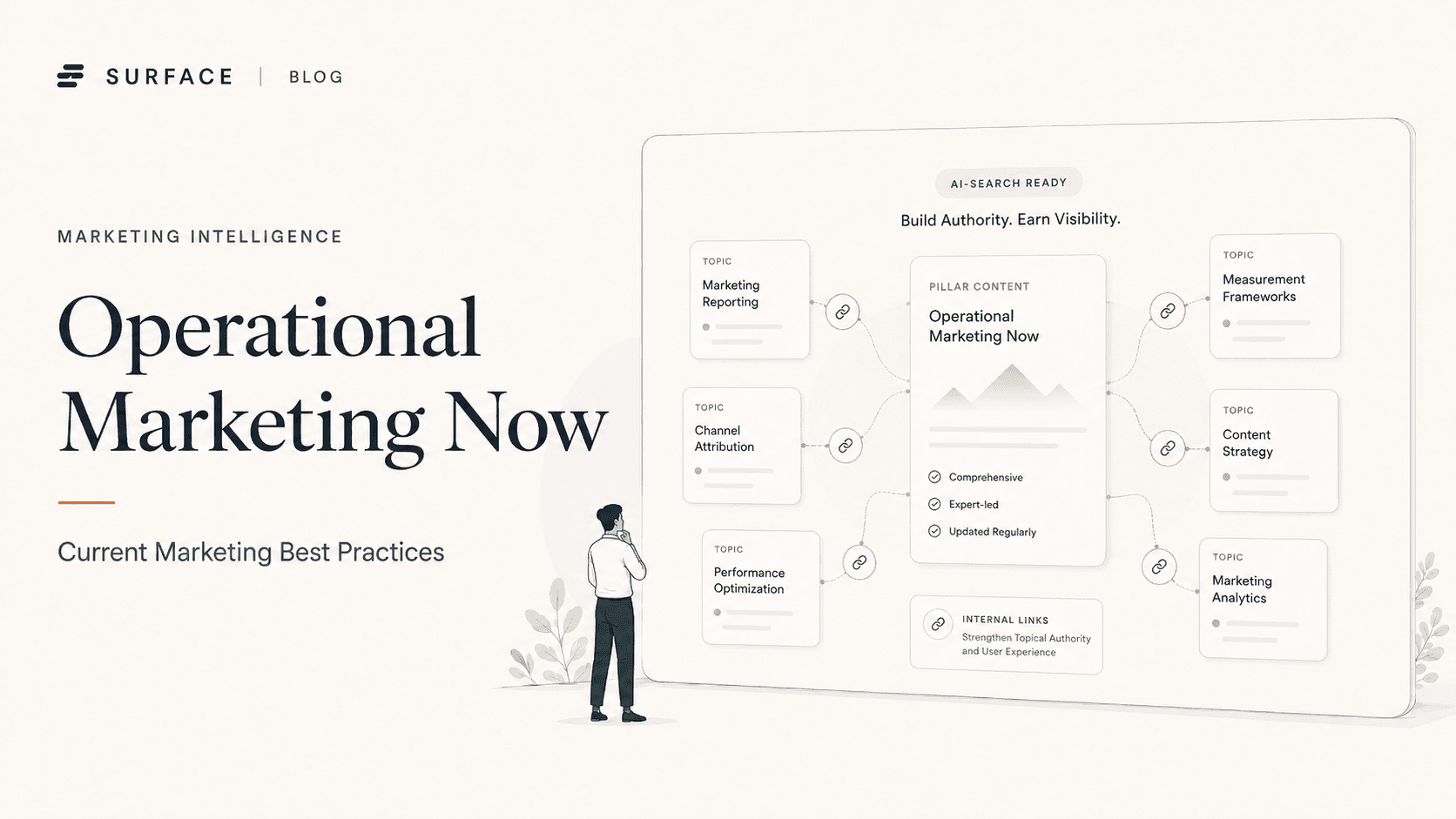
A strong informational page introduces the concept. A supporting post answers the common objection. A comparison page helps the reader understand tradeoffs. A case study proves the claim in a real environment. A landing page connects the topic to the service. A conversion page gives the buyer a next step. Internal links do more than pass authority. They show the reader how the company thinks.
This is where content and lead operations start to touch. If a buyer reads three educational pages, studies a case study, visits pricing, leaves, returns, and finally books a demo, the content did more than attract traffic. It shaped intent. Surface’s guide on tracking the full lead journey before a buyer converts speaks to this operationally because teams need to know which pages people read, which problems they appear to be solving, and how seriously they are evaluating the product before they raise their hand.
This matters for humans. It also matters for AI systems.
People think in categories. They understand relationships, hierarchies, examples, and pathways. Retrieval systems also benefit from clean categories, clear relationships, and well-labeled pages. When marketers build a coherent content architecture, they help both audiences. The human reader can make sense of the path. The machine reader can classify, retrieve, and recommend the source with less ambiguity.
That is why technical SEO, content strategy, and editorial quality are starting to blur into one another. Teams cannot separate site structure from comprehension. They cannot separate comprehension from conversion. They cannot separate conversion from trust.
Templates are useful until they become the work
Templates are having a moment because everyone wants scalable content.
I get it. A good brief helps an editor explain the assignment. A repeatable page structure helps a team keep quality stable. A markdown template can help people stop reinventing the same page every week. A schema pattern can help technical teams publish cleaner pages. Nobody should be romantic about chaos.
But a template is a baseline. It is not the goal.
When teams treat templates as the finished strategy, they start publishing pages that technically include the right parts and still feel dead. The H1 contains the keyword. The H2s contain the related phrases. The CTA exists. The internal links exist. The FAQ exists. The meta description exists. The page passes the checklist, then fails the reader.
Readers can feel when the writer had nothing to say.
AI systems may also become better at noticing the same thing through different signals: redundancy, thin evidence, weak source trails, commodity phrasing, poor differentiation, stale claims, and missing context. Even when the system does not “feel” the dullness, the buyer does.
This is why the next content advantage will not come from prompt tricks alone. It will come from teams that can combine operational discipline with actual taste, actual reading, actual expertise, and actual evidence.
Use AI to accelerate research. Use it to repurpose, revise, summarize, cluster, compare, audit, and structure. Use it to find gaps in your site architecture. Use it to draft the first version when that makes sense. But do not confuse acceleration with judgment.
Tools are held by people.
What marketers should actually do this week
First, audit five strategic pages for comprehension, not just SEO. Pick pages that matter to revenue: a core service page, a product page, a comparison page, a case study, and a high-traffic blog. Ask whether a skeptical buyer can understand the claim, verify the proof, compare the options, and take the next step without needing a salesperson to rescue the page.
Second, add source trails to the pages where trust matters. Link claims to primary sources, original data, product documentation, customer proof, expert context, and dated evidence. Do not bury the proof in a vague “research shows” sentence. Show the reader where the claim comes from.
Third, rebuild your AI visibility measurement around citations, mentions, source inclusion, branded demand, prompt coverage, and sales-call language. Traffic still matters. Rankings still matter. But buyers may encounter you through summaries, recommendations, cited answers, and off-site proof long before they click.
Fourth, stop publishing isolated blogs with no path. Every meaningful blog should know where it sits in the system. What pillar does it support? What landing page does it point to? What comparison or objection does it answer? What should the reader read next? What should sales do with it?
Fifth, connect content to conversion operations. Surface’s guide to inbound lead generation frames content as one way potential customers discover, engage, and exchange information for value. That only works cleanly when marketers build the path from content to qualification to routing to follow-up with the same care they bring to the page itself.
Sixth, put a reading person in the content QA process. I mean that seriously. Someone on the team should have enough active relationship with reading to notice pacing, confusion, flattening, repetition, false clarity, missing context, weak transitions, and fake usefulness. This does not need to be precious. It needs to be operational.
The practical takeaway
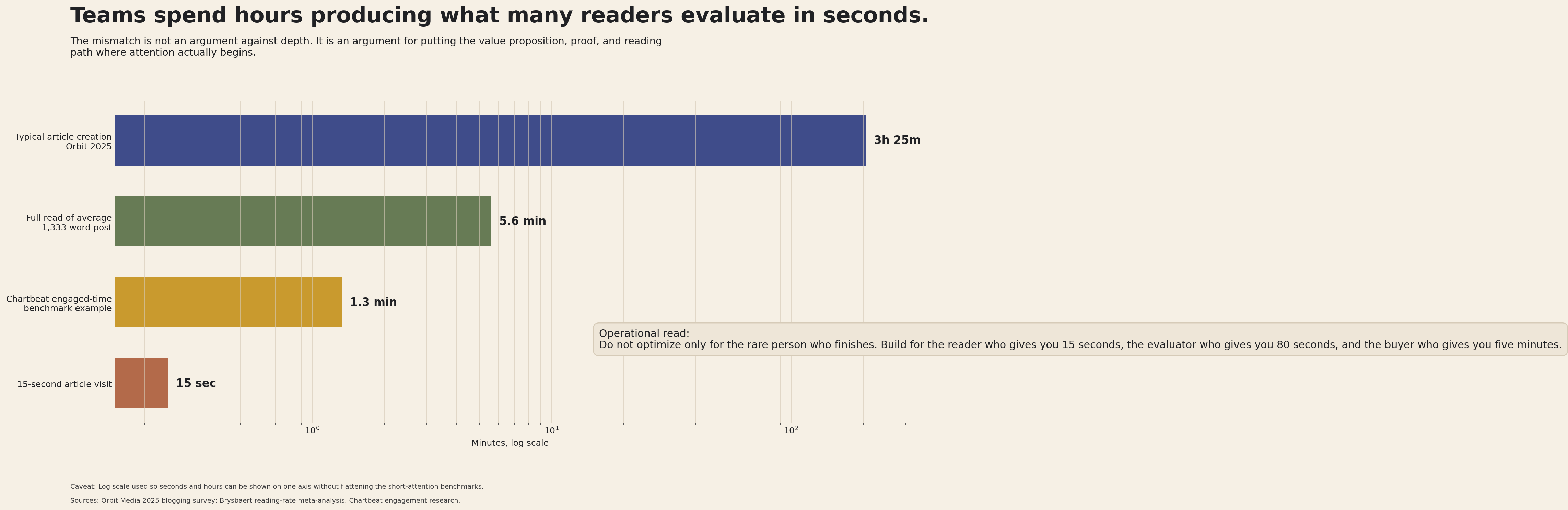
People love to say no one reads.
I think the truth is more annoying and more useful: people read when reading helps them.
They read when the stakes are high. They read when the page respects their intelligence. They read when the structure gives them somewhere to go. They read when the writer knows the subject. They read when the content helps them make a decision they could not make as confidently before.
That is the bar.
In the retrieval era, marketers are no longer writing only for a search engine or only for a human reader. They are writing for a chain of interpretation: crawler, index, model, summary, citation, buyer, stakeholder, sales call, internal champion, procurement process, board conversation.
At every point in that chain, comprehension can improve or decay.
So yes, make the page scannable. Yes, structure the argument. Yes, use clear headings. Yes, answer the query. Yes, help the model retrieve the claim.
But also, for the love of all things readable, read something longer than a feed before declaring how readers work.
The future of content marketing belongs to teams that can publish consistently, prove their claims, build useful paths, and write with enough respect for the reader that the page feels like it was made by someone who has spent time inside language.
That is not nostalgia.
That is operations.
If your team wants the content path and conversion path to work together instead of living in separate systems, Surface Labs helps B2B teams capture, qualify, route, and convert inbound leads after the reader finally raises their hand.